The Ancient Hebrew Lexicon of the Bible
By Jeff A. Benner
Purpose of the Lexicon
In order to demonstrate the need for an Ancient Hebrew lexicon let us examine the word הלל (halel), how it is written and what it means.
The Hebrew word הלל as it appears here, in Hebrew dictionaries and in Hebrew Bibles, is written with the Modern Hebrew script. But where did the Modern Hebrew script come from? Hebrew was originally written with a pictographic script similar to Egyptian Hieroglyphs, but when Israel was taken into captivity in Babylon they adopted the Aramaic script of the region and used it to write Hebrew. The Modern Hebrew script used today is in fact Aramaic in origin, not Hebrew.
According to Hebrew dictionaries and lexicons the word הלל is translated as "praise". The Ancient Hebrew language is a concrete oriented language meaning that the meaning of Hebrew words are rooted in something that can be sensed by the five senses such as a tree which can be seen, sweet which can be tasted and noise which can be heard. Abstract concepts such as "praise" have no foundation in the concrete and are a product of ancient Greek philosophy.
If the word is written with the Aramaic script and the definition "praise" is from the Greek, where is the Hebrew in this word? The purpose of the Ancient Hebrew Lexicon of the Bible is to restore the original Hebrew to the Hebrew language of the Bible.
The word הלל would have been written as   in the Early Hebrew script (over 3200 years ago) or as in the Early Hebrew script (over 3200 years ago) or as   in the Middle Hebrew script (between 3200 and 2500 years ago). The original pictographic letters of the parent root is a man with his arms raised "looking" at something spectacular and a shepherd staff that is used to move the flock "toward" a place. When these are combined the idea of "looking toward" something is represented. The original meaning of is the North Star, a bright light in the night sky that is "looked toward" to guide one on the journey. in the Middle Hebrew script (between 3200 and 2500 years ago). The original pictographic letters of the parent root is a man with his arms raised "looking" at something spectacular and a shepherd staff that is used to move the flock "toward" a place. When these are combined the idea of "looking toward" something is represented. The original meaning of is the North Star, a bright light in the night sky that is "looked toward" to guide one on the journey.
If we are going to read the Bible correctly it must be through the perspective of the Ancient Hebrews who wrote it, not from a Modern Aramaic or Greek perspective. The word in its original concrete meaning is a bright light that guides the journey and we "praise" Yah by looking at him to guide us on our journey through life.
Perspective of the Lexicon
The first and foremost concept that a reader of the Biblical text must learn is that the ancient Hebrews were products of an eastern culture while you, as the reader, are the product of a western culture. These two cultures are as different as oil and vinegar; they do not mix very well. What may seem rational in our western minds would be considered irrational to an easterner of an ancient Near East culture. The same is true in the reverse, what may be rational to an ancient Easterner would be completely irrational in our western mind.
The authors of the Biblical text are writing from within their culture to those of the same culture. In order to fully understand the text one needs to understand the culture and thought processes of the Hebrew people.
All existing Hebrew Lexicons of the Bible convert the vocabulary of the ancient Hebrews into a vocabulary compatible to our modern western language. The greatest problem with this is that it promotes western thought when reading the Biblical text. In this Lexicon the mind of the reader is transformed into an eastern one in order to understand the text through the eyes of the ancient Hebrews who penned the words of the Bible.
Evolution of the Hebrew Alphabet
The Hebrew alphabet was written with a script belonging to the Semitic family of languages. The Semitic script followed three basic stages of development, Early, Middle and Late.
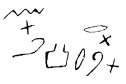
Fig. 1 - Ancient Semitic pictographic inscription on stone boulder c. 1500 BCE
|
The Early Semitic script was pictographic (fig. 1) where each letter represented an object. In figure 1, the top left corner letter is a picture of water representing the sound "M". The second letter from right at the bottom is a picture of a shepherd staff representing the sound "L".
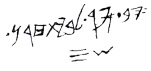
Fig. 2 - Ancient Hebrew inscription on potsherd c. 900 BCE
|
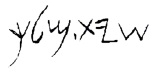
Fig. 3 - Moabite inscription on stone c. 900 BCE
|
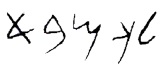
Fig. 4 - Ammonite inscription on stone c. 900 BCE
|
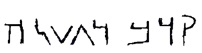
Fig. 5 - Aramaic inscription on stone incense altar c. 500 BCE
|
The Middle Semitic script (fig. 2) is an evolved form of the original pictographic script into a simpler form and used by the different Semitic groups including the Hebrews (fig. 2), Moabites (fig. 3), Ammonites (fig. 4), Arameans (fig. 5) and others.
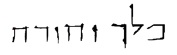
Fig. 6 - Aramaic inscription on stone plaque c. 20 CE.
|
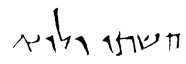
Fig. 7 - Hebrew writings from the Dead Sea Scrolls c. 200 BCE
|
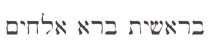
Fig. 8 - Modern Hebrew script from the Hebrew Bible.
|
The Aramaic script of the Arameans in Babylon evolved into the Late Semitic script independently from other Semitic scripts (fig. 6). When the Hebrew people were taken into Babylonian captivity, they adopted the Aramaic script (fig. 7) and is still in use today (fig. 8).
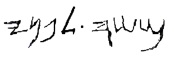
Fig. 9 - Pictographic Hebrew writings from the Dead Sea Scrolls c. 100 BCE
|
While the majority of the Hebrew texts of the first century BCE and into the first century CE were written in the Late Semitic or Aramaic script, the Middle Semitic script was not lost. It was still used on occasion such as on many of the Jewish coins as well as some religious scrolls such as those found in the Dead Sea caves (fig. 9).
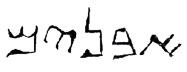
Fig. 10 - Samaritan scripts
|
The Samaritans lived in the land of Samaria, a region of Israel, at the time of Israel's captivity; they were not taken into Babylon with Israel. As a result of their isolation they are the only culture to retain a script (fig. 10) similar to the Middle Semitic script and is still used to this day in the Samaritan community.
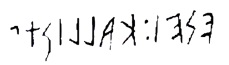
Fig. 11 - Greek inscription found on bowl c. 800 BCE
|
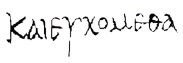
Fig. 12 - Greek writing on New Testament papyrus c. 200 CE
|
Around 1000 BCE, the Greeks adopted the Middle Semitic script (fig. 11) and began to evolve independently over the centuries to become the Greek script (fig. 12) used today.
Changes in Hebrew Letters
While the Modern Hebrew alphabet consists of twenty-two letters, the evidence suggests that there were additional letters in the original Semitic and Hebrew alphabet. One of the ancient Semitic languages of Canaan was Ugarit. This ancient language is almost identical to the Hebrew language of the Bible but, instead of consisting of twenty-two letters it has twenty-eight letters. One of the major differences between Ugarit and Hebrew is the additional letter ghayin, which evidence suggests was part of the ancient Hebrew alphabet, but later absorbed by the letter ayin and subsequently disappeared from the alphabet.
The strongest evidence of the missing ghayin can be found in the two different meanings of Hebrew word רע, which can mean "friend" or "bad". Originally, the word meaning "bad" was spelled with a ghayin and the word meaning "friend" was spelled with an ayin.
Another change over the millennia in the Hebrew alphabet is the letters samehh and shin. In the Modern Hebrew alphabet the letter shin (ש) represents two different sounds, an "sh" and an "s". To differentiate these two sounds a dot is placed above the shin in different locations. For the "sh" sound the dot is placed on the right (שׁ) and called a shin and for the "s" sound it is placed on the left (שׂ) and called a sin.
In most cases words spelled with the sin are more closely related in meaning with words spelled with the samech (ס). In addition, Hebrew words spelled with the sin are written with the samech in other Semitic languages.
Because the Ancient Hebrew Lexicon of the Bible is concerned with restoring Hebrew words to their original meaning and relationship with the ancient roots, the Hebrew words spelled with the original spellings and the spelling of the word which appears in the Hebrew Bible is listed under " Alternate spellings."
Over time words and their roots evolve. One of the most common evolutions of a word is an exchange for one sounding letter for another. An example is the common Hebrew word אמר, which was originally spelled אמל, with a shift from the letter lamed at the end to a resh. Impact on Ancient Hebrew Studies.
The Hebrew Root System
Because the Ancient Hebrew language is a root oriented language, the Ancient Hebrew Lexicon of the Bible groups all words according to their roots, beginning with the two-letter Parent Root. Located below the Parent Roots are the three-letter Child and Adopted Roots. Below each of the Child and Adopted Roots are all of the words derived from those roots.
Acknowledgments
I would first like to thank my wife Denise for her patience and encouragement. I am extremely blessed to have been privileged with her as a gift from above and the one who has been my continual companion and confidant. She has always supported me in this endeavor and allowed me the space and time for research and writing. Without her devotion and inspiration this work would never have come to fruition.
I am also grateful to Dr. Larry S. Hirsch. Without his initial introduction into Hebrew thought and language and his instruction in Biblical studies I would never have started this journey into the Ancient Hebrew thought, culture and language.
Also my friend Michael Calpino who continually supported my studies in the Hebrew language, listened to my discoveries and assisted me by working out many word and root origins and meanings.
I would also like to thank the hundreds of people who have supported my work at the Ancient Hebrew Research Center Website with their suggestions, corrections and encouragement.
There are also many great Hebrew scholars who, with their research and work, have laid the foundations for me and others interested in the Hebrew culture and language who are much deserving of our thanks.
|